Monthly Cash Flow Workbook
$59.00
Plan when customer payments arrive, when bills fall due, and how much cash your business is likely to have at month-end. Use a minimum reserve to identify periods that need attention before you make new spending commitments.
Description
12-month small business cash flow forecast in Excel
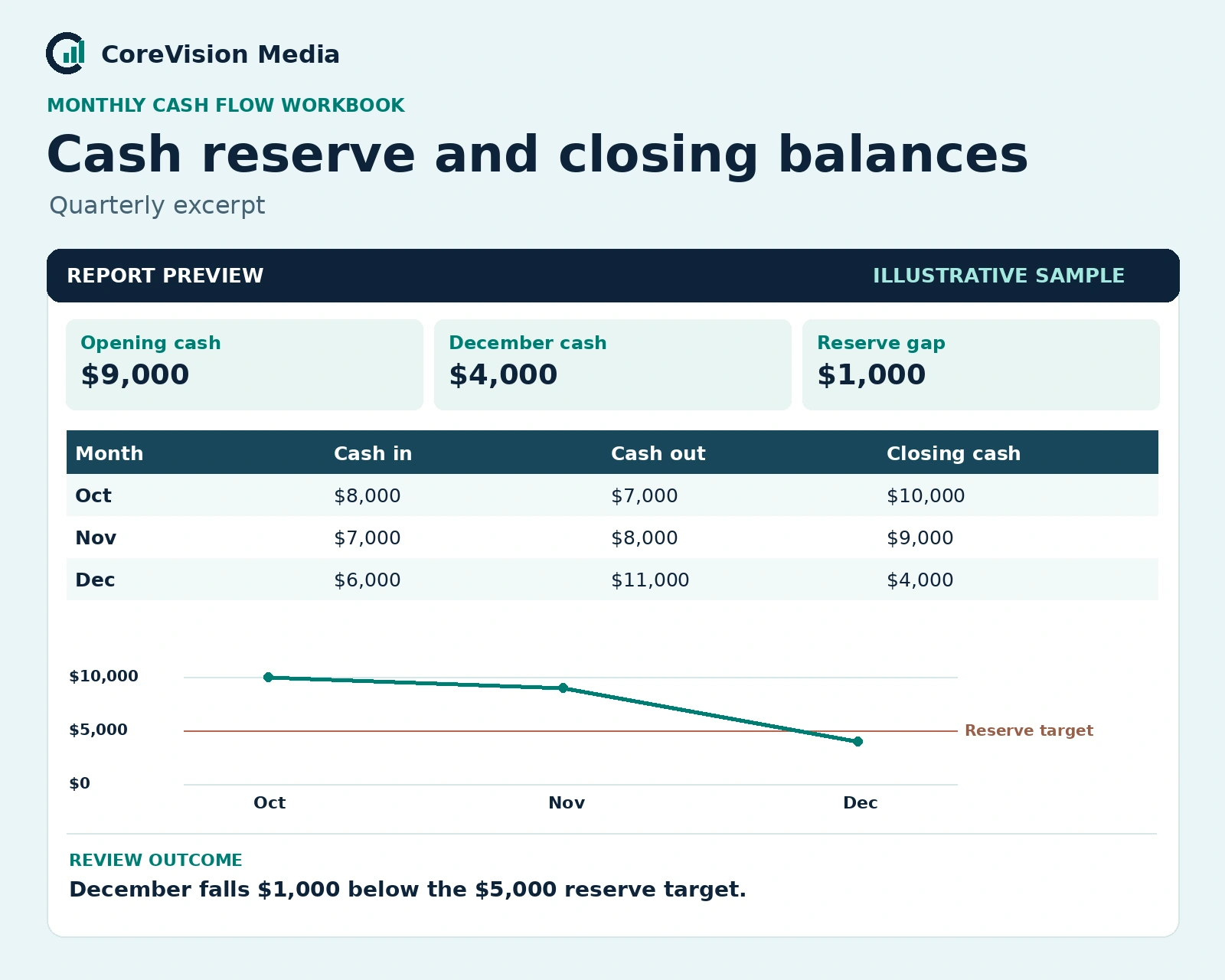
Check opening cash against your records and scan for overdue collections before updating the forecast. Once you enter actual receipts and payments, compare the monthly variance with the plan and note the reason for the largest change. The two dashboard views answer different questions. Month-end balances show whether the reserve is at risk, and cash in versus cash out helps locate the receipt or payment causing the change.
Inputs and reporting views
- Opening cash and reserve. Set the starting balance and minimum cash target
- Forecast receipts and payments. Enter when money is expected to clear
- Actuals and month-end close. Record cleared amounts and carry the ending cash forward
- Dashboard review. Compare closing balances and monthly inflows versus outflows
How to use it
- Set a starting month and opening cash balance. Enter customer receipts, deposits, payroll, rent, supplier bills, and other payments in the months they are expected to clear. Revisit the largest items when dates change.
- At month-end, enter cash actually received and paid and mark the month as closed. Carry the actual closing balance forward into the remaining forecast. Compare actual net cash flow with the forecast for each closed month and investigate significant differences.
Worked example
The December reserve gap is $1,000
With $9,000 opening cash, $6,000 in receipts, and $11,000 in payments, December closes at $4,000. Compare that with the $5,000 reserve before approving additional spending.
Review month-end balances against your cash reserve, then compare cash in with cash out. If a large invoice slips past payroll, the cash forecast helps you see which month is affected and which dates to confirm first.
Who it’s for
Owners and freelancers with uneven collections, recurring payments, or upfront project costs.
Which workbook should I choose?
- Will I have enough cash to cover upcoming bills? Monthly Cash Flow Workbook — Expected payment dates, monthly closing balances, and gaps against your cash reserve.
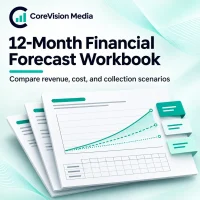
- How would lower sales or higher costs change my plan? 12-Month Financial Forecast Workbook — Baseline and alternative assumptions for revenue, costs, and collections.
Frequently asked questions
What happens when I close a month?
Use the actual closing cash as the starting point for the remaining forecast, and compare actual net cash movement with the plan for that month.
How is this different from Financial Forecast?
Use Cash Flow to check liquidity and when bills are covered. Use Financial Forecast to compare how changes in sales, costs, and collections affect your broader plan.
Related workbook: 12-Month Financial Forecast Workbook. For product or compatibility questions, contact CoreVision Media.
Reviews
There are no reviews yet.